Merging Physical Table Observations and Digital Analytics in Modern Poker Tournaments
Written by Klara Richter · Aug 8, 2026

Merging Physical Table Observations and Digital Analytics in Modern Poker Tournaments
Live poker environments have long relied on physical cues such as posture shifts, eye contact patterns, and chip handling rhythms to inform decisions, while digital platforms now supply real-time data streams on betting frequencies and position statistics, and the growing overlap between these domains creates opportunities for players who study both sides. Researchers tracking tournament outcomes across multiple formats note that individuals who carry forward insights from physical tables often adjust their digital strategies more effectively during multi-table events.
Core Physical Table Elements That Translate to Digital Settings
Physical tables generate information through timing tells and seating arrangements, and these details map onto digital mechanics when players interpret betting intervals or avatar positioning as proxies for live behaviors. Data from regulated North American markets shows increased participation in hybrid events where software records action sequences that mirror those observed at brick-and-mortar venues, allowing pattern recognition across both environments. Observers note that chip-stacking habits visible in person frequently correspond to consistent raise sizing tendencies that appear in platform logs, and this continuity helps participants refine range construction without relying solely on automated alerts.
Digital Platform Mechanics That Capture Live Dynamics
Online tournament interfaces record metrics including fold-to-continuation-bet percentages and three-bet frequencies from specific positions, and these statistics echo the kind of information a live player might gather by watching opponents across multiple orbits. Studies conducted through European gaming research groups indicate that platforms incorporating visual heatmaps of prior hands enable users to simulate physical table awareness even when seated remotely. August 2026 figures from several state gaming commissions reveal steady growth in digital tournament volume, with many operators integrating compliance layers that flag unusual patterns while preserving the strategic depth derived from live observation techniques.
Practical Integration Approaches Used by Tournament Participants
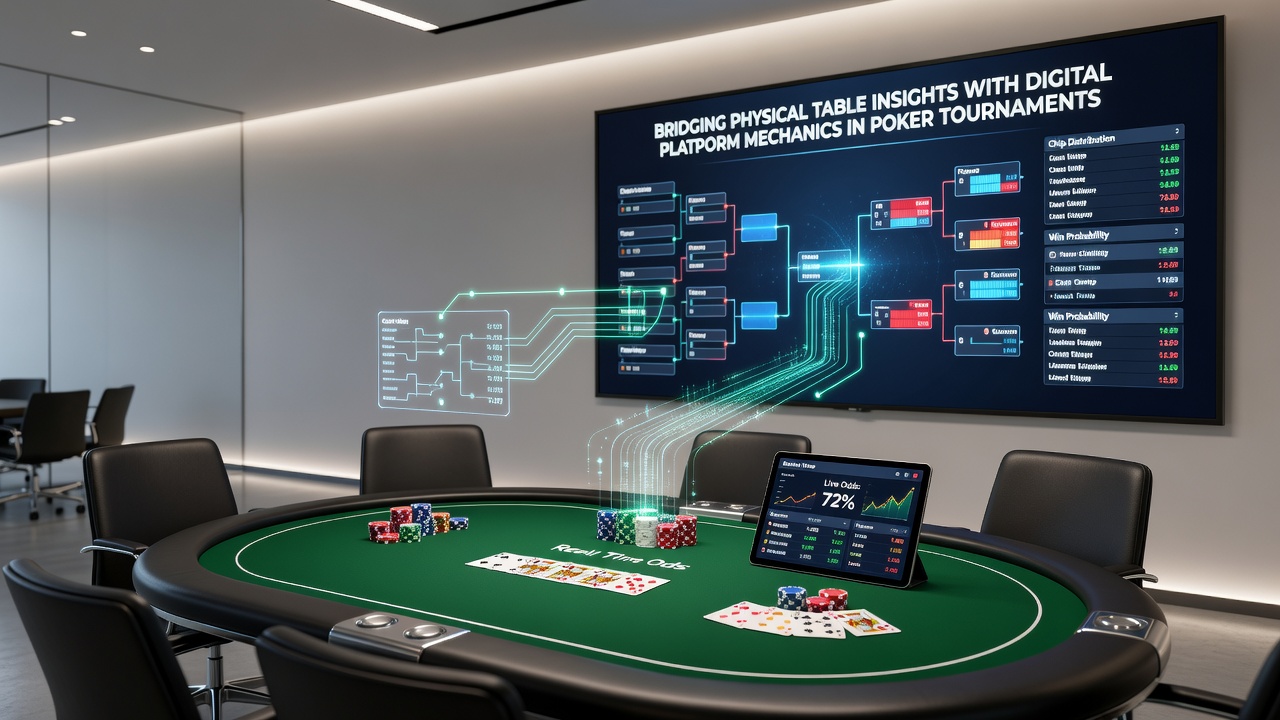
Players often begin by logging physical session notes on timing and aggression levels, then upload comparable data from digital hand histories into analysis programs that highlight overlaps. One documented approach involves cross-referencing live seating charts with virtual position statistics, and this method has appeared in reports from Canadian provincial regulators tracking player behavior trends. Software tools that overlay historical live-equivalent metrics onto current digital tables allow participants to adjust decisions in real time, and industry associations in Australia have recorded rising adoption of such combined systems during major series. The process requires consistent data entry from both formats yet yields measurable improvements in decision accuracy when applied across extended tournament schedules.
Regulatory and Security Considerations in Combined Formats
Authorities in multiple jurisdictions require platforms to maintain separation between bonus structures and security protocols while still permitting analytical features that draw from live-derived insights. Reports issued by gaming oversight bodies in Asia-Pacific regions emphasize the need for transparent logging when physical tells influence digital choices, and these guidelines help prevent exploitation of integrated tools. Tournament organizers increasingly schedule events that accommodate both live qualifiers advancing to digital stages and remote entrants who must demonstrate familiarity with physical dynamics through recorded simulations. Data compiled through academic partnerships with gaming departments shows that clear rule sets around data usage support sustained participation without compromising integrity measures.
Examples from Recent Tournament Series
During 2026 festival circuits several operators introduced side events where participants submitted brief physical observation journals alongside their digital hand reviews, and results indicated higher placement consistency among those who completed both components. European trade organizations tracking similar pilots reported comparable outcomes, noting that the combination reduced reliance on single-format assumptions. Players who applied these dual approaches frequently identified betting patterns that appeared across live footage and platform replays, thereby strengthening preflop and postflop planning in later stages.
Conclusion
The connection between physical table observations and digital platform mechanics continues to expand through shared data practices and evolving tournament structures, and participants who systematically align insights from both sources gain access to broader strategic frameworks. Regulatory updates scheduled through late 2026 are expected to further standardize how these elements interact, while ongoing research from varied international sources will likely refine the tools available for cross-format analysis.